
Mid-360L

Small But Mighty
360°×44°
FOV
0.1 m
Min. Detection Range[1]
45 m
@10% Reflectivity[2]
100,000
Points/Second
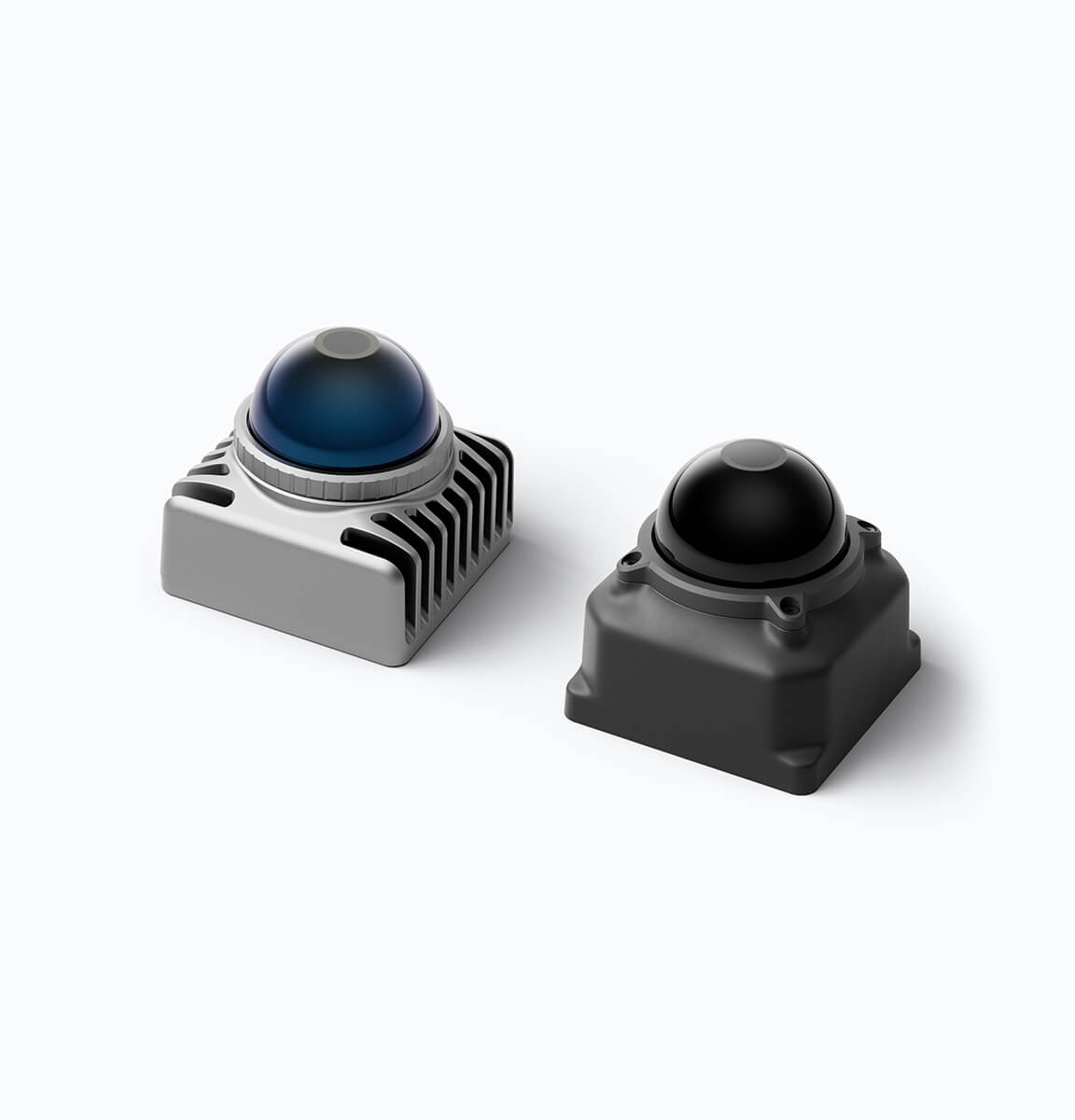
65×65×63
L×W×H (mm)
245 g
Weight
360° Super-Wide FOV
Smaller and Lighter
Mid-360L packs powerful performance within its compact size, which makes it easy to integrate for sleek, concealed designs while opening up more possibilities for the integrated design of mobile robots.
Greater Performance With Reduced Blind Spot
Minimum detection range of 10 cm
Mid-360L can detect objects as close as 10 cm. Its compact size makes it easy to mount and achieve zero blind spot coverage.
Active Anti-Interference
Mid-360L features an active anti-interference design, ensuring performance without disruption from multiple LiDAR signals, even in indoor environments.
Light or Dark
Unaffected by bright or low-light environments. Mid-360L offers consistently excellent performance with a detection range of up to 100 m (cut-off range).
Recommended Mounting Combinations
Wide Usage Across Scenarios
Compared with traditional solutions using single-line LiDAR and depth cameras for navigation and obstacle avoidance, Mid-360L leverages a 360°×44° ultra-wide FOV for comprehensive 3D perception. It captures rich environmental information in 3D space, and easily adapts to tasks like cleaning, mowing, and surveying, supporting safe and efficient operation across diverse worksites.
Efficient 3D Mapping, Fast Deployment
Capturing more feature points than 2D LiDARs, Mid-360L enables precise mapping without complex site modifications, significantly reducing deployment time and costs. Its high-quality point clouds also enhance the detection of small obstacles, safeguarding safe robot operation in complex environments.
Non-Repetitive Scan, Rich Details
Mid-360L uses non-repetitive scanning technology. As the scan time increases, unscanned areas gradually decrease and coverage becomes denser. Combined with its competitive pricing, this feature enables users to achieve high-density scanning results comparable to expensive multi-channel LiDARs at a fraction of the cost.
Innovations that Break Cost Barriers
Self-Developed Sensor Chip
Livox has successfully self-developed its core sensor chip, achieving full control over key components. This not only reconstructs the Mid-360L's optoelectronic perception system from the ground up but also lays a solid foundation for cost reduction.
Maximized Hardware Potential
By restructuring core algorithms, the system's demand for chip computing power is reduced. This enables Mid-360L to deliver exceptional perception performance using cost-effective hardware.

High-Volume Mass Production
Livox has comprehensively upgraded its production lines, increasing hourly capacity by over three times. This scaled manufacturing ensures stable delivery while reducing costs through economies of scale.
1. If the target object is between 0.1 m and 0.2 m from the sensor, point cloud data can be detected and output, but since the detection accuracy cannot be guaranteed, this data is for reference only.
2. Mid-360L has a maximum detection range of 100 m (cut-off range). At an ambient temperature of 25°C, the typical maximum detection distance is 45 m when the target object has a surface reflectivity of 10%.